Teach budgets, paychecks and interest to a mixed-ability class
Consumer math classes mix students who struggle with decimals and students ready for compound interest. Pennymoor's three levels line up skill by skill, so you teach one lesson and hand out three versions.
How education teams use Pennymoor
- Pick the skill for the day (for example reading a paycheck: worksheets #02, #12 and #22).
- Teach the idea once with the Level 1 example.
- Hand out Level 1, 2 or 3 by group; calculators as the teacher notes suggest.
- Mark from the keys and move a student up a level when they are ready.
Level 1 uses whole dollars and short tables; Level 2 adds decimals and percentages (deductions, sales tax, interest); Level 3 is multi-step (50/30/20 analysis, take-home %, compound vs simple interest, payoff time).
One teacher's licence covers your own students every year, in class, homeschool or tutoring.
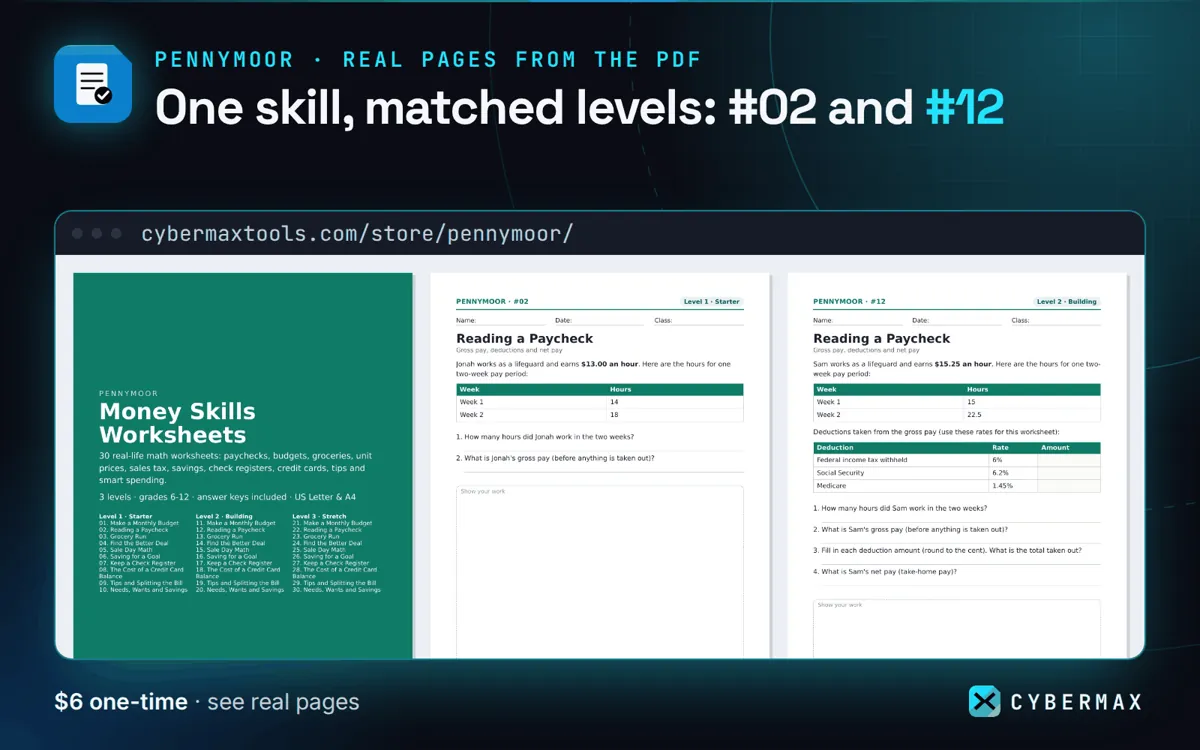
From the answer keys, v1.0.0: matched skills across levels
| # | Worksheet | Level | Skill |
|---|---|---|---|
| 02 | Reading a Paycheck | 1 | gross pay |
| 15 | Sale Day Math | 2 | percent off, sales tax |
| 18 | The Cost of a Credit Card Balance | 2 | monthly interest |
| 26 | Saving for a Goal | 3 | simple vs. compound |
Source: Pennymoor v1.0.0 contents and answer keys (generated by products/pennymoor/src/worksheets.py; rows in products/pennymoor/store/listing.json).
FAQ
Does it follow a state standard?
It covers common personal finance skills taught in consumer math and financial literacy courses; check it against your own standards.
Why not free worksheets?
Free sheets are one-offs; this pack covers 10 skills at 3 matched levels with keys that are always right.
Pennymoor: full guide with prices and alternatives · All use cases · Store